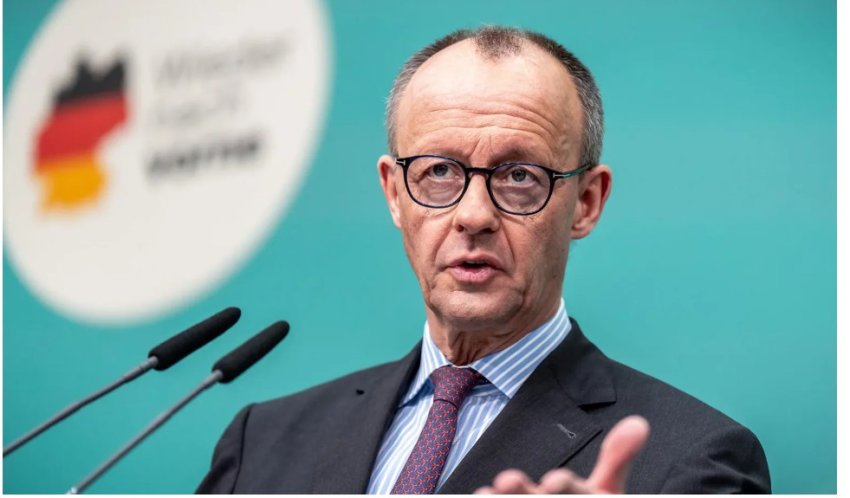
Friedrich Merz: Only Military or Economic “Exhaustion” Will End the War in Ukraine
German Chancellor Friedrich Merz has said that the war in Ukraine is unlikely to end through current negotiations, arguing that the conflict will conclude only when one side becomes militarily or economically exhausted. His remarks, published in an interview with the German newspaper Rheinpfalz, reflect growing concern among European leaders about the long-term trajectory of the war.
Speaking about the ongoing fighting, Merz stated that, in his view, diplomatic efforts alone are unlikely to produce a decisive breakthrough at this stage. He suggested that the conflict could continue until either Russia or Ukraine reaches a point where continuing the war is no longer sustainable. According to the chancellor, this reality requires Europe to prepare for a prolonged period of instability.
Merz also commented directly on Russian President Vladimir Putin, saying that humanitarian arguments and appeals to logic are unlikely to change Moscow’s approach. He described this assessment as a “bitter truth,” emphasizing that European strategy should focus on limiting Russia’s capacity to sustain the conflict over time.
The German leader argued that Europe’s efforts must aim at weakening Russia’s ability to continue military operations and finance the war economically. He stressed the importance of coordinated policies, including sanctions, defense cooperation, and long-term support for Ukraine. Analysts say such statements reflect a broader shift among some European policymakers toward strategies centered on endurance rather than quick diplomatic solutions.
In the interview, Merz suggested that the leadership structure in Russia depends heavily on maintaining wartime momentum. He claimed that those in power cannot easily step away from the conflict, partly because of the challenges associated with reintegrating thousands of soldiers returning from the front lines, many of whom have suffered severe injuries. According to him, this dynamic may prolong the war beyond earlier expectations.
The chancellor used strong language to describe the current state of Russia, referring to what he called a “deep state of barbarism.” He added that Europe should be prepared for a difficult reality in which political change in Moscow may not occur in the near future. His comments highlight the increasingly firm tone adopted by some European leaders when discussing the conflict.
Merz’s remarks have sparked debate among political analysts. Some experts agree with his assessment that wars of this scale often end through exhaustion rather than negotiation. Others argue that diplomacy remains essential, warning that framing the conflict solely in terms of endurance could reduce incentives for peace talks.
Across Europe, discussions continue about how to balance military support for Ukraine with efforts to prevent escalation. Several governments have emphasized the need to maintain unity within the European Union and NATO while also managing economic pressures at home. Rising energy costs, defense spending, and political debates within member states have made the issue a central topic in European politics.
The war in Ukraine has already reshaped security policy across the continent, prompting increased defense budgets and closer coordination between European allies. Merz’s comments underline the expectation among many leaders that the conflict may continue for an extended period, requiring sustained political and economic commitment.
Meanwhile, international observers note that statements from prominent European figures often signal strategic messaging aimed at both domestic audiences and international partners. By highlighting the possibility of a long war, leaders may be preparing citizens for ongoing challenges while reinforcing support for Ukraine.
Despite his strong rhetoric, Merz did not dismiss the role of diplomacy entirely. Analysts say that European governments continue to support negotiations when conditions allow, but many believe that meaningful talks may depend on changes in the military balance or economic pressures faced by the parties involved.
As the conflict enters another phase, the German chancellor’s remarks contribute to a wider debate about how and when the war could end. Whether through negotiations, exhaustion, or a combination of factors, the future of the conflict remains uncertain. For now, European leaders appear focused on long-term strategies designed to sustain support for Ukraine while preparing for the possibility that the war may last longer than initially expected.
Nëse don, mund ta bëj edhe: