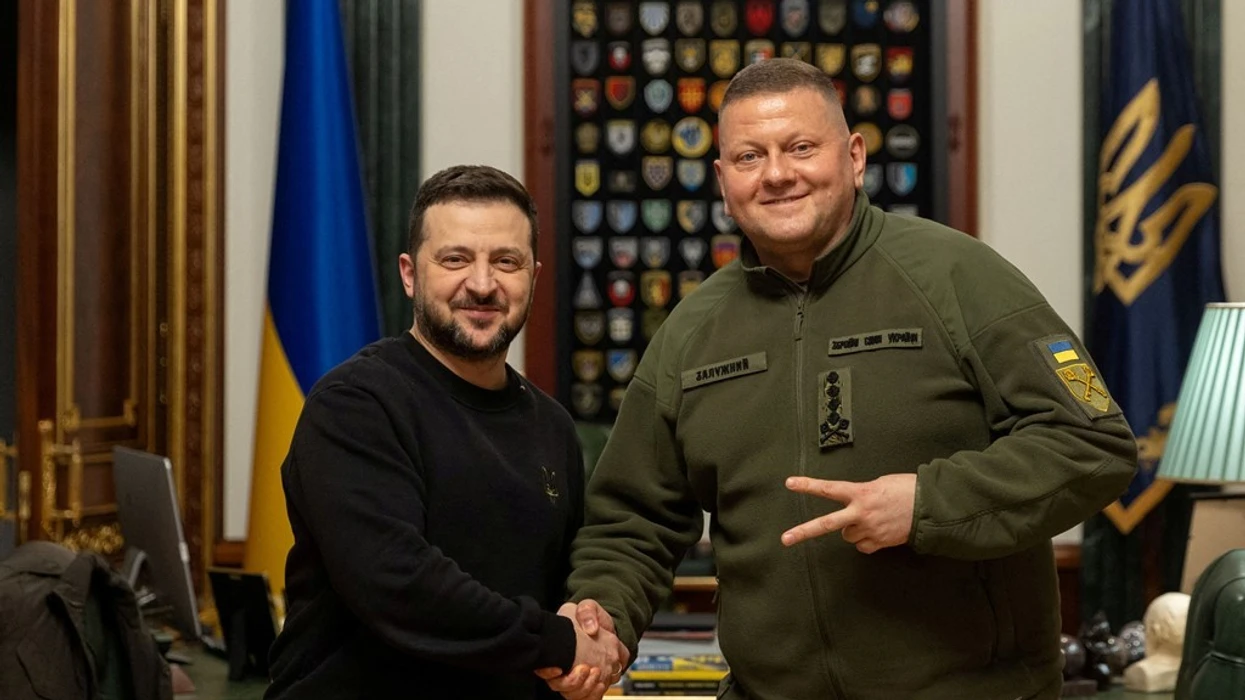
Ukraine’s Former Army Chief Reveals Rift With Zelensky After 2022 Office Raid
Ukraine’s former top military commander, General Valeriy Zaluzhnyi, has publicly spoken for the first time about tensions with President Volodymyr Zelensky, shedding light on internal disagreements that emerged during the early stages of Russia’s full-scale invasion in 2022. Now serving as Ukraine’s ambassador to the United Kingdom, Zaluzhnyi described how differences over strategy and decision-making created a strain between military leadership and the political administration during one of the most critical periods in modern Ukrainian history.
Zaluzhnyi, who served as Ukraine’s commander-in-chief until February 2024, explained that disagreements began soon after Russia launched its large-scale offensive in February 2022. According to him, debates were frequent as leaders tried to determine the most effective way to defend the country, manage limited resources, and maintain morale among both soldiers and civilians. Speaking in an interview with the Associated Press, he emphasized that such disputes were not unusual during wartime, but admitted that tensions sometimes escalated due to the enormous pressure faced by Ukraine’s leadership.
The former commander said that the relationship reached a breaking point later in 2022, when dozens of agents from Ukraine’s domestic intelligence service reportedly entered the premises of his office. Zaluzhnyi described the incident as deeply alarming and claimed it felt like an act of intimidation at a time when unity was essential. He recalled that the situation left him concerned about trust between military and political institutions, particularly when the country was facing daily attacks and uncertainty about the future.
Ukraine’s Security Service (SBU), however, has disputed his characterization of the event. Officials stated that no formal search of his office was ever conducted, though they acknowledged that the address was linked to a separate investigation unrelated to Zaluzhnyi personally. The differing accounts highlight the sensitive nature of the episode and suggest that misunderstandings or miscommunication may have contributed to the perception of conflict.
During the interview, Zaluzhnyi described the moment he learned about the operation. He said he immediately contacted the head of Zelensky’s presidential staff to express his concern and warn that the presence of intelligence agents in a military command area could be seen as a serious breach. According to his recollection, he told officials he was prepared to deploy military personnel to secure the command center if necessary, emphasizing that he viewed the protection of operational headquarters as a top priority during wartime.
The former general explained that his reaction was driven not by personal anger but by the fear that internal disputes could weaken Ukraine’s defense efforts. He argued that the military needed stability and clear lines of authority to respond effectively to the evolving battlefield situation. At the same time, he acknowledged that civilian oversight remains an important part of democratic governance, suggesting that balancing these principles during a crisis is never simple.
Analysts note that relations between military commanders and political leaders often become strained during prolonged conflicts. Decisions about troop deployments, resource allocation, and international diplomacy can create disagreements even among allies who share the same overall goals. In Ukraine’s case, the stakes were exceptionally high, as leaders were trying to coordinate resistance against a larger invading force while also maintaining support from Western partners.
Zaluzhnyi’s comments provide rare insight into internal discussions that were largely kept out of the public eye during the first year of the war. At that time, Ukrainian officials worked hard to present a unified front to both domestic and international audiences, emphasizing resilience and cooperation. Public acknowledgment of disagreements now offers a more nuanced picture of how decisions were made behind the scenes.
Despite describing moments of tension, Zaluzhnyi avoided framing the relationship with Zelensky as purely negative. He noted that both he and the president were committed to Ukraine’s survival and understood the responsibility they carried. Differences, he said, were often rooted in contrasting perspectives between military strategy and political considerations, rather than personal hostility.
Observers say the interview comes at a significant moment for Ukraine, as the country continues to navigate a complex military and diplomatic landscape. Zaluzhnyi’s transition from commander-in-chief to ambassador marked a major shift within Ukraine’s leadership structure. Some experts believe his new diplomatic role allows him to speak more openly about past events while still supporting Ukraine’s broader objectives on the international stage.
The discussion has also sparked renewed debate among Ukrainians and international observers about the challenges of wartime leadership. Many argue that open dialogue about past disagreements can strengthen democratic institutions by encouraging transparency and accountability. Others warn that revisiting sensitive episodes could risk fueling speculation or political tension during an ongoing conflict.
Zaluzhnyi stressed that his intention was not to create division but to share lessons learned from one of the most difficult periods in Ukraine’s history. He said that wartime leadership requires constant adaptation and that disagreements should be viewed as part of the decision-making process rather than signs of weakness. According to him, the ultimate goal has always been to protect Ukraine’s sovereignty and ensure the safety of its citizens.
The former commander also reflected on how the war has reshaped Ukraine’s military culture. He described a rapid transformation driven by necessity, including improved coordination with international partners and the adoption of new technologies on the battlefield. These developments, he said, required both political and military leaders to work closely together, even when their perspectives differed.
As Ukraine continues to face ongoing challenges, Zaluzhnyi’s remarks offer a rare glimpse into the human side of leadership during crisis. His account underscores the reality that even in moments of national unity, debates and disagreements can emerge as leaders try to navigate unprecedented circumstances.
For many observers, the interview represents an opportunity to better understand the complexities behind Ukraine’s wartime decision-making. While the details of the 2022 incident remain disputed, the broader message highlights the importance of communication and trust between institutions during times of conflict.
Ultimately, Zaluzhnyi expressed hope that Ukraine’s experience will serve as a lesson for future generations about resilience and cooperation under pressure. He emphasized that strong leadership does not mean the absence of disagreement, but rather the ability to manage differences while remaining focused on a shared mission. As Ukraine moves forward, his reflections contribute to an ongoing conversation about the balance between military authority and democratic governance in one of the most challenging periods of the country’s modern history.